Services

Training built around the work you need.

We train service dogs for psychiatric, mobility, PTSD, and autism support, and we coach handlers through public access and owner-trainer programs. Every team begins with an evaluation.

01

Psychiatric service dogs

Psychiatric service dogs are trained to perform specific tasks for a person with a psychiatric disability. Depending on the handler, that may include interrupting anxiety or panic, applying deep pressure, retrieving medication, leading the handler to an exit, or checking a room. We design the task list with you, then proof those skills at home and in public.
02

Mobility work

Mobility tasks might include brace and balance work, pulling a manual wheelchair on approved surfaces, retrieving dropped items, opening doors, or carrying a bag. These tasks ask a lot of a dog’s body. We only assign them when the dog’s size, structure, and veterinary picture support the work, and we revisit that as the dog matures.

03

PTSD support

For handlers living with PTSD, we focus on reliable, cue-based tasks: waking a person from a nightmare, getting help, creating space in a crowd, or helping the handler ground during a flashback. Training is paced with care, and public work is introduced only when the dog is settled enough to be a help, not another source of stress.

04

Autism support

Autism-support work is built around the individual handler. Tasks may include tethering, interrupting self-stimulatory behavior that poses a safety risk, helping with transitions, or assisting in a crowd. When the handler is a child, we work with the family on what is realistic, who holds the leash, and how to keep the dog’s welfare in view.

05

Public access training

A service dog has to work quietly in the places you already go. We practice settling under tables, ignoring food and strangers, riding elevators and transit, and moving through stores and sidewalks across Atlanta. Public access is trained as a skill, not assumed because a dog wears a vest — and a vest is never required under the ADA.

06

Owner-trainer coaching

Many teams do well when the handler is the primary trainer, with a professional in the wings. Coaching includes a written plan, regular lessons, homework, and video or in-person feedback. We will also tell you if the dog in front of us is a poor candidate, early enough that you can make a clear decision.

07

Evaluations

An evaluation is a structured first meeting. We talk through your needs and daily life, look at any dog you already have, and discuss temperament, health, and training history. You leave with a written recommendation: a path forward, a referral, or a candid “not yet.” The evaluation fee is [EVALUATION FEE].

In the city

Skills that hold up on Peachtree and at home.

We proof work in the settings that matter in Atlanta: grocery aisles, office lobbies, parks, MARTA, and quiet residential streets. The goal is a dog who can settle, think, and do the job when the day is ordinary and when it is not.

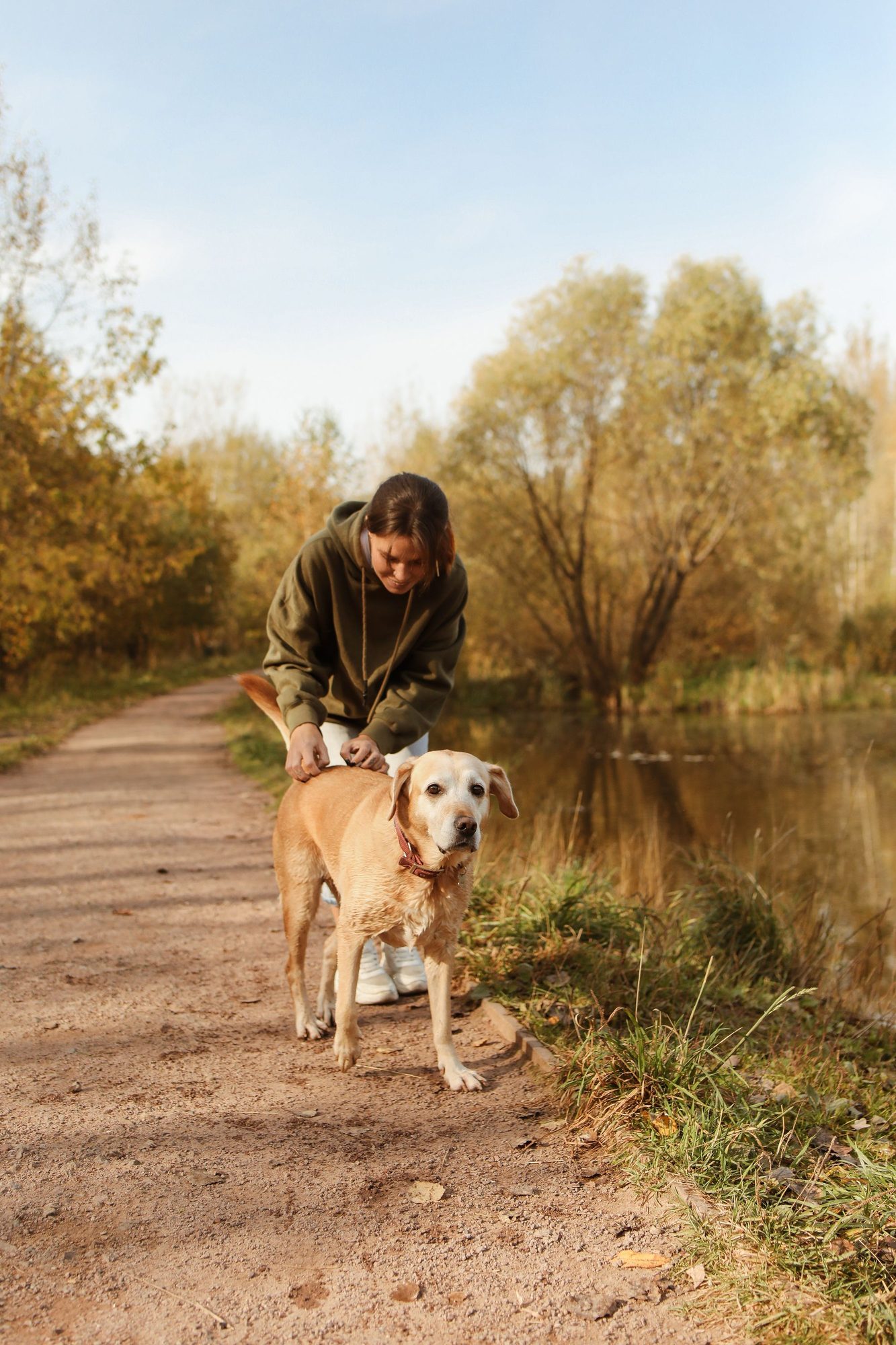
A handler adjusting a yellow Labrador’s harness on a tree-lined path beside water.